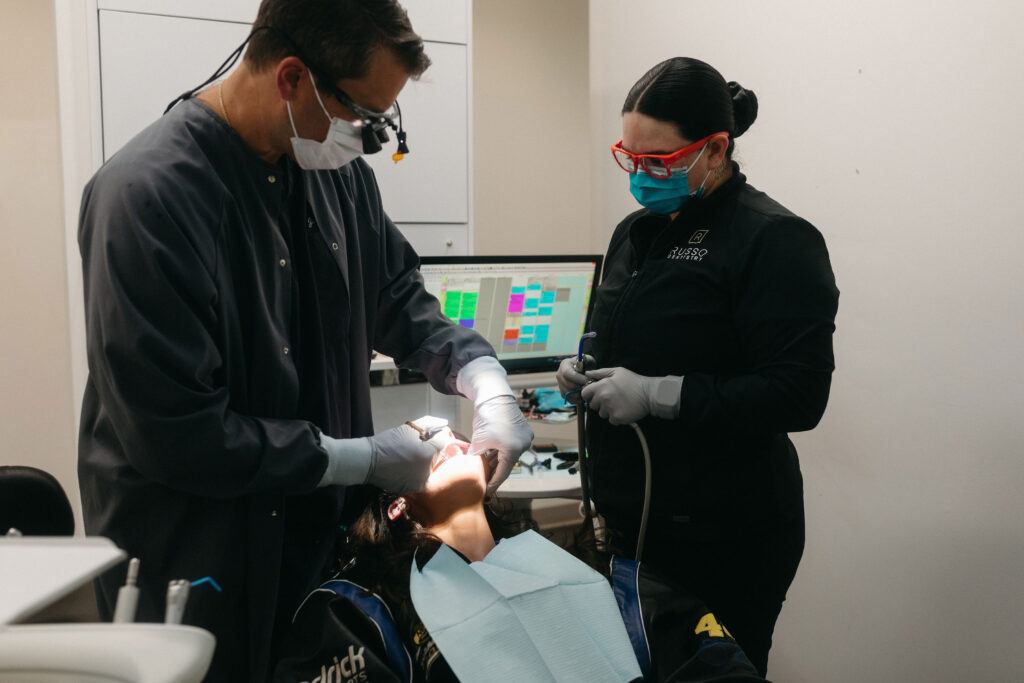
Tooth-Colored Fillings
Composite Fillings in Raleigh, NC
A cavity or damaged filling deserves care that considers both the health of your tooth and the appearance of your smile. At Russo Dentistry, tooth-colored fillings use composite resin to repair suitable cavities and blend with the surrounding teeth.
Dr. Justin Russo evaluates the tooth, explains your options, and plans a restoration around your bite and the tooth structure that remains. If you are looking for composite fillings or cavity treatment in Raleigh, NC, start with an examination and a conversation about your concerns.
Book a Dental Visit Call 919-890-5147
What Are Tooth-Colored Fillings?
Composite fillings are made from a tooth-colored resin reinforced with fine filler particles. The material is bonded to the tooth, shaped to restore its contours, and hardened with a curing light. We select a shade intended to blend with your natural teeth.
Composite can be used for appropriate restorations in front and back teeth. It is often a good option for small to moderate areas of decay. Suitability depends on the size and location of the repair, your bite, and whether the tooth can be kept dry during placement.
When Might You Need a Composite Filling?
- A cavity: A filling can replace tooth structure lost to decay when enough healthy tooth remains.
- A damaged restoration: A cracked, worn, or loose filling may need repair or replacement after evaluation.
- A small chip or defect: Composite may be used to restore a limited area of damage when the tooth and bite allow.
Sensitivity or a rough edge can have several causes, and some cavities produce no noticeable symptoms. A dental exam, with X-rays when indicated, helps us determine what is happening and whether a filling is the right treatment.
A Natural Appearance and a Comfortable Fit
The details of a filling matter. Dr. Russo considers the shade, shape, contact with neighboring teeth, and the way your teeth meet when you bite. Our goal is a repair that looks natural and supports everyday function.
Bonding allows a conservative approach when the situation permits, but the amount of preparation depends on the decay or damage present. We explain what needs to be restored and why, so you can make an informed decision about treatment.
What to Expect During Your Filling Appointment
- Review the plan and your comfort. We discuss the tooth being treated, answer questions, and use local anesthesia when needed.
- Prepare the tooth. The affected area is treated and the tooth is kept clean and dry for bonding.
- Place the composite. The resin is bonded, shaped, and light-cured to build the restoration.
- Finish and check the bite. We smooth and polish the filling and check how it fits against the opposing teeth.
Tell us about dental anxiety or previous difficulty getting numb before your visit. Ask about relaxation dentistry if you would like to discuss additional comfort options. If you take prescribed anxiolysis medication, a responsible adult must drive you to and from the office. Do not drive yourself.
When Is a Crown a Better Choice?
A filling needs enough healthy tooth structure to support it. A tooth with extensive damage, a large existing restoration, or certain cracks may need the additional coverage of a porcelain crown. If decay has affected the pulp inside the tooth, root canal therapy may also be needed.
Your examination guides the recommendation. We will discuss the reasons for a filling, crown, or other approach and how that choice fits your treatment plan.
Should an Existing Filling Be Replaced?
We assess the condition of the filling and the surrounding tooth, including signs of wear, fractures, or recurrent decay. Age or color alone does not establish that a restoration has failed.
A sound silver amalgam filling without decay does not automatically need replacement. If you are concerned about an older filling or its appearance, we can discuss the potential benefits, risks, and alternatives before you decide.
Caring for Your Tooth After a Filling
Follow your dental team’s instructions, and wait until numbness has worn off before chewing to avoid biting your cheek or tongue. Some temporary sensitivity may occur. Contact us if your bite feels uneven, the filling breaks, or pain persists or worsens.
Continue brushing with fluoride toothpaste, cleaning between your teeth, and attending recommended checkups. The tooth around a filling can still develop decay. Tell us if you clench or grind so we can discuss whether additional protection is appropriate.
Composite Filling Costs and Insurance
The cost of a tooth-colored filling depends on the tooth, the size and number of surfaces involved, and the treatment needed. Our team can review an estimate and explain your options before care.
Russo Dentistry accepts and files PPO dental insurance. Coverage for composite fillings varies, and your insurer may calculate benefits differently depending on the tooth and material. Review our insurance information or ask about membership and payment options if you do not have coverage.
Tooth-Colored Filling FAQs
How long do composite fillings last?
Composite fillings can serve for many years, but they are not permanent. The size of the restoration, chewing forces, grinding, oral hygiene, and new decay can affect longevity. We check your fillings during routine visits and recommend care based on their condition.
Can composite fillings be used on back teeth?
Yes, when the tooth and size of the repair are suitable. For a heavily damaged back tooth or a large restoration under substantial chewing pressure, another option may be more appropriate.
Are composite fillings the same as cosmetic bonding?
Both can use tooth-colored composite resin. A filling restores an area affected by decay or damage; cosmetic bonding uses the material to change a tooth’s shape or appearance. The reason for treatment and the design of the repair differ.
Can I book if another dentist told me I have a cavity?
Yes. Let our team know about the recommendation when you schedule. Tell us about recent X-rays or other records that may help with your evaluation. Dr. Russo will assess the tooth and discuss the treatment options with you.
What are composite fillings made of?
Composite resin combines a resin material with reinforcing filler particles. It can be selected in tooth-like shades and bonded to prepared tooth structure. The choice of restoration depends on the tooth’s location, the size of the repair, and whether the area can be kept appropriately isolated during placement.
How do I know whether I need a filling?
A dentist assesses the tooth with an examination and, when indicated, X-rays or other tests. A cavity may exist without pain, while sensitivity can have several causes besides decay. We will explain the findings and whether the area needs a restoration, preventive treatment, or monitoring.
Can an early cavity heal without a filling?
Early mineral loss before a physical hole forms may sometimes be managed with fluoride, plaque control, and changes to dietary habits. Once tooth structure has been lost to a cavity, a restoration is commonly needed. The examination determines which stage is present and whether monitoring is reasonable.
Does getting a tooth-colored filling hurt?
Local anesthetic is used when needed to numb the tooth. You may notice pressure, vibration, or water, and you should tell us if anything feels uncomfortable. Let the team know about dental anxiety or past difficulty getting numb so your comfort plan can be discussed beforehand.
What happens during a composite filling appointment?
The dentist removes the affected material as needed, isolates the tooth, places the bonding materials and composite, and hardens the restoration with a curing light. The repair is then shaped and polished, and the bite is checked. The exact steps depend on the tooth and the repair.
How long does a filling appointment take?
Time depends on the number of teeth, the size and location of each restoration, and whether an old filling must be removed. Keeping the area clean and dry is important for composite bonding. Ask for an appointment estimate when scheduling; larger or more complex repairs may take longer.
When can I eat after a composite filling?
The composite is hardened during the appointment, but you should wait until numbness has worn off before chewing to avoid biting your cheek or tongue. Avoid hot liquids while sensation is reduced, and follow any additional instructions. Choose comfortable foods if the tooth is initially tender.
Is sensitivity normal after a filling?
Some temporary sensitivity can occur, especially after a deeper repair. Call if it becomes severe, worsens, lingers after hot or cold exposure, or does not improve as expected. Pain on biting can have several causes, including a bite that needs adjustment, and should be evaluated.
What if my filling feels high, rough, or catches floss?
Contact the office so we can check the restoration’s shape, contacts, and bite. A small adjustment or polish may help, but the cause should be confirmed. Do not file the filling yourself or repeatedly force floss through an area where it shreds or gets stuck.
Will a tooth-colored filling stain or change color?
Composite may develop surface stain or color changes over time. The material, diet, habits, and maintenance affect its appearance. We can assess whether polishing, repair, or replacement is appropriate. A change in color alone does not tell you whether the restoration is leaking or has decay beneath it.
Will teeth whitening whiten my composite fillings?
Whitening affects natural tooth structure differently from composite resin, so an existing filling may no longer match after whitening. If you are planning cosmetic color changes, discuss them before a visible filling is placed. We can explain the sequence and whether any later restoration replacement may be needed.
Should I replace a silver filling that is not causing problems?
Not automatically. An intact amalgam filling without decay does not routinely need removal just because it is silver. Replacement removes additional tooth structure and should have a clear reason. We can discuss the condition of the filling, cosmetic goals, material concerns, and the benefits and risks of replacement.
When is a crown more appropriate than a large filling?
If too little sound tooth remains, a large filling may not adequately protect the tooth from chewing forces or fracture. A crack, weakened cusp, or extensive damage can change the recommendation. We can compare a filling with a porcelain crown based on your tooth’s structure and bite.
Can I get another cavity around a filling?
Yes. A filling restores the damaged area but does not prevent decay elsewhere on the tooth or around the restoration. Daily brushing with fluoride toothpaste, cleaning between teeth, and risk-based checkups remain important. Tell us about dry mouth or frequent sugary drinks so prevention can be tailored to you.
What should I do if a filling chips or falls out?
Call to arrange an evaluation, avoid chewing on that tooth, and keep the area gently clean. Do not use household glue or attempt a permanent repair yourself. Let us know about pain, swelling, or a sharp edge; the remaining tooth may need a new filling or a different restoration.
How much do composite fillings cost in Raleigh, and does insurance cover them?
Cost depends on the tooth, the number of surfaces restored, and the size and complexity of the repair. Some insurance plans apply different benefits to composite and other materials. Ask for a treatment estimate and benefit review before care; we can also discuss payment options.
Schedule Tooth-Colored Fillings in Raleigh, NC
New patients are welcome at Russo Dentistry. If you have a suspected cavity, a damaged filling, or questions about composite restorations, contact us to arrange an evaluation. Our office is at 3811 Ed Drive, Suite 120, Raleigh, NC 27612. View our office location and contact details.
Book a Dental Visit Call 919-890-5147