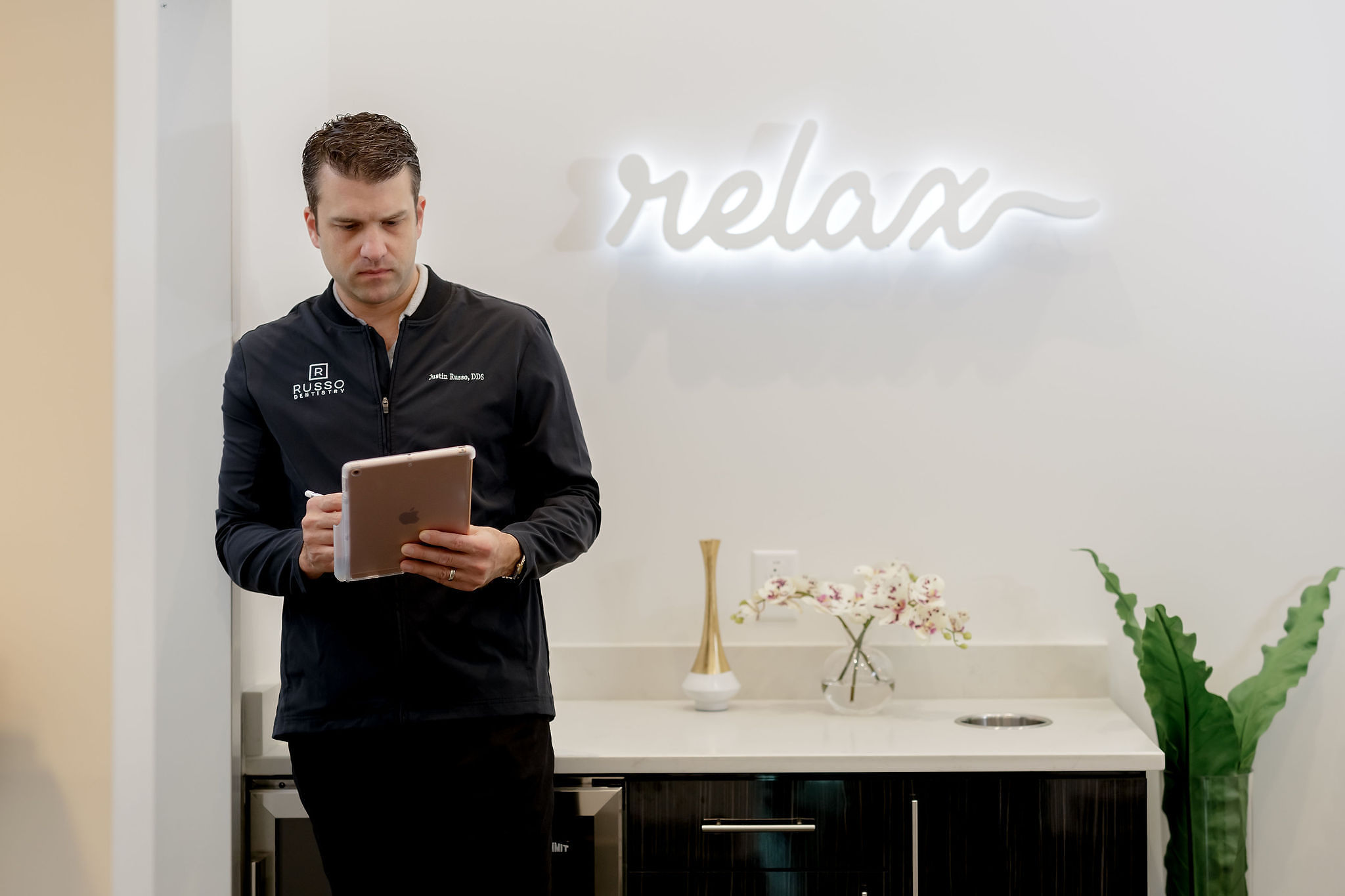
Relaxation Dentistry in Raleigh, NC
Dental Anxiety Care with a Personalized Plan
If fear of the dentist has kept you from scheduling care, your first step can be a conversation. At Russo Dentistry in Raleigh, NC, relaxation dentistry helps patients explore an approach to dental anxiety that fits their health, concerns, and planned treatment.
Dr. Justin Russo reviews your needs before recommending anxiolysis, also called minimal sedation. Whether you are new to our practice or returning after time away, tell us what makes dental visits difficult so we can plan with you.
Request a Relaxation Dentistry Consultation Call 919-890-5147
What Is Relaxation Dentistry (Anxiolysis)?
Relaxation dentistry is another term for anxiolysis, which means reducing anxiety. At Russo Dentistry, this approach uses minimal sedation to help you feel calmer during dental care while remaining awake and able to respond normally to verbal instructions.
Driver required: If you take prescribed anxiolysis medication, you must have a responsible adult drive you to and from your appointment. Do not drive yourself.
Dr. Justin Russo reviews your health history and dental needs before recommending medication. If medication is prescribed, our team provides individualized instructions for your appointment.

Nitrous oxide (laughing gas) may be included when appropriate to help you feel more comfortable. Your dental team will review any combination of medications and explain the recovery and transportation instructions that apply to your visit.
Anxiolysis and Sedation Dentistry: What to Know
Sedation dentistry describes different levels of sedation. The relaxation dentistry approach described here is anxiolysis, or minimal sedation. It is intended to reduce anxiety while you remain responsive to verbal instructions. Your dentist will assess whether this approach is appropriate for you.
Medication can still affect alertness and coordination, and individual responses vary. If you take prescribed anxiolysis medication, a responsible adult must drive you to and from your appointment. Do not drive yourself. Follow our team’s instructions about returning to your usual activities.
Who May Benefit from Relaxation Dentistry?
- Dental anxiety or dental phobia
- Past traumatic dental experiences
- A fear of needles, drills, or dental instruments
- Difficulty sitting still for extended periods
- A sensitive gag reflex that interferes with treatment
- Mild to moderate claustrophobia in the dental chair
- High levels of general anxiety in medical settings
Tell us if any of these concerns apply to you. We will discuss your experience, review your health and medications, and explain whether relaxation dentistry may be suitable for your planned care.
Plan Your Dental Care and Comfort Together
If you are considering porcelain veneers, dental implants, or root canal therapy, discuss dental anxiety when you schedule. Our team can review comfort options alongside the procedure, appointment length, and recovery plan.
What to Expect at Your Relaxation Dentistry Appointment
Personalized Consultation
Start with a conversation about your dental concerns, health history, medications, and previous experiences. Dr. Russo evaluates whether anxiolysis is appropriate and whether nitrous oxide should be part of your care.
Prescription for Relaxation
If appropriate, Dr. Russo will prescribe medication and provide personalized instructions. Take medication only as directed by your dental team. If you take prescribed anxiolysis medication, you must arrange for a responsible adult to drive you both to the office and home afterward.
During Your Dental Visit
Our team checks your comfort and response throughout the appointment. Minimal sedation is intended to help reduce anxiety while you can respond to verbal instructions. Nitrous oxide may be included when your dental team recommends it.
Recovery and Required Driver
A driver to and from your appointment is required whenever you take prescribed anxiolysis medication. Do not drive yourself. Follow our team’s instructions about activity restrictions and when you can safely resume driving and your usual routine.
Relaxation Dentistry FAQs
Will I be asleep during anxiolysis?
Anxiolysis is minimal sedation, intended to reduce anxiety while you remain responsive to verbal instructions. It is different from general anesthesia. Your dentist will explain the intended effects and review the plan with you.
Do I need a driver if I take prescribed anxiolysis medicine?
Yes. You must have a responsible adult drive you both to the office and home afterward whenever you take prescribed anxiolysis medication. Do not drive yourself. Arrange transportation before your appointment and follow our team’s instructions about when you can resume driving.
Can I schedule if I have not seen a dentist in years?
Yes. Tell our team about your concerns when you contact us. Your visit starts with understanding your dental health and priorities. We can discuss the care you need and whether relaxation dentistry is appropriate before planning treatment.
How much does relaxation dentistry cost?
Cost depends on your recommended care and comfort plan. Ask for an estimate before treatment and discuss any insurance questions or payment options with our team.
What does anxiolysis mean in dentistry?
Anxiolysis means reducing anxiety. Relaxation dentistry uses this approach to help you feel more at ease while receiving care. When medication is used for minimal sedation, the goal is for you to remain responsive. Your dentist explains the intended effects, limitations, and precautions for your individual plan.
How is anxiolysis different from local anesthesia?
Anxiolysis addresses anxiety, while local anesthetic numbs the area being treated to help prevent procedural pain. One does not automatically replace the other. You may still need local anesthetic for a filling, crown, or other procedure even when you are taking prescribed medicine to reduce anxiety.
Is relaxation dentistry the same as being put to sleep?
No. The minimal sedation discussed on this page is different from deep sedation or general anesthesia. Do not assume that you will be unconscious or unaware of everything during treatment. If your needs call for a different level of care, the dentist will discuss an appropriate plan or referral.
Who is a candidate for prescribed anxiety medication?
Suitability depends on the planned procedure, the severity of anxiety, your medical history, current medications, and previous responses to sedation. A consultation is needed before medication is prescribed. Tell us about breathing problems, sleep apnea, allergies, and other conditions that may affect the choice.
Can we discuss my dental anxiety before scheduling treatment?
Yes. Contact Russo Dentistry and describe what worries you, such as injections, sounds, loss of control, or a previous experience. A consultation gives us time to discuss your dental needs and comfort preferences before deciding on treatment. You do not have to agree to a procedure simply to ask questions.
Are there ways to make a visit easier without medication?
Tell the team what helps you feel comfortable. Clear explanations, an agreed signal for a pause, and pacing the appointment can be useful. We can discuss practical adjustments and whether medication would add a meaningful benefit. For severe or persistent phobia, additional support from a mental health professional may help.
What medication will I take, and when should I take it?
Your prescription and written instructions specify the medication, dose, and timing for you. There is no universal dosing schedule for every patient. Do not take extra doses, use someone else’s medication, or reuse an old prescription for a new appointment without instructions from the treating dentist.
Can I eat or drink before my appointment?
Follow the eating and drinking instructions given for your medication and procedure. Requirements can vary, particularly when medical conditions or other medicines are involved. Contact the office before the visit if anything is unclear; do not substitute general advice from another patient’s treatment plan.
Should I take my usual prescription medicines?
Give us a complete list of prescription drugs, over-the-counter products, supplements, and substances you use. The dentist may need to coordinate with your prescribing clinician. Do not independently stop a regular medicine or combine it with the prescribed anxiolysis medicine without reviewing the instructions.
Can I drink alcohol or use other sedating substances with anxiolysis medicine?
Do not combine the prescribed medicine with alcohol or recreational drugs. Tell the dentist about sleep medicines, opioids, cannabis, and other products that can affect alertness or breathing. Follow the specific restrictions you receive, and call before taking anything additional if you are uncertain about an interaction.
Can I drive if I feel normal after taking the medication?
No. Whenever you take prescribed anxiolysis medication, a responsible adult must drive you to and from the appointment. Feeling alert does not reliably show that your reaction time and judgment have recovered. Do not resume driving until the period specified in your discharge instructions has passed.
Can I take a taxi or rideshare by myself?
Do not plan to travel alone after taking prescribed anxiolysis medication. Arrange a responsible adult to accompany you and drive you to and from the office. If you need a different transportation arrangement, discuss it with our team in advance; a rideshare driver alone is not your responsible adult escort.
Can I work, supervise children, or make important decisions afterward?
Plan time to recover according to your discharge instructions. Medication can affect coordination and judgment even when you feel better. Arrange help with children or other dependents, and avoid driving, machinery, and important decisions during the restricted period. Ask how long these precautions apply to your particular medication.
What if I am pregnant, breastfeeding, or have sleep apnea?
Tell the dentist before taking any prescribed anxiolysis medicine. Pregnancy, breastfeeding, sleep apnea, and other breathing or medical concerns can change medication suitability and monitoring needs. We may coordinate with your medical clinician or recommend another approach. A medication that was suitable previously may not be appropriate now.
Will I remember the appointment, and are there side effects?
Memory and alertness vary with the medicine, dose, and individual response; complete amnesia is not guaranteed. Drowsiness, dizziness, nausea, and other reactions are possible. The dentist will review relevant risks. Seek emergency help for difficulty breathing or a severe reaction, and contact the office about other unexpected symptoms.
Does dental insurance cover relaxation dentistry?
Coverage for anxiety management can differ from coverage for the dental procedure itself and may be limited or excluded. Ask for a written estimate that separates the proposed services and any medication-related costs. Our team can review benefits and payment options, but your insurer determines final payment.
Schedule Relaxation Dentistry in Raleigh, NC
Take the next step at your own pace. New patients can contact Russo Dentistry to discuss dental anxiety and arrange a consultation with Dr. Russo. Our office is at 3811 Ed Drive, Suite 120, Raleigh, NC 27612. View our Raleigh office location and contact details.
Request a Relaxation Dentistry Consultation Call 919-890-5147